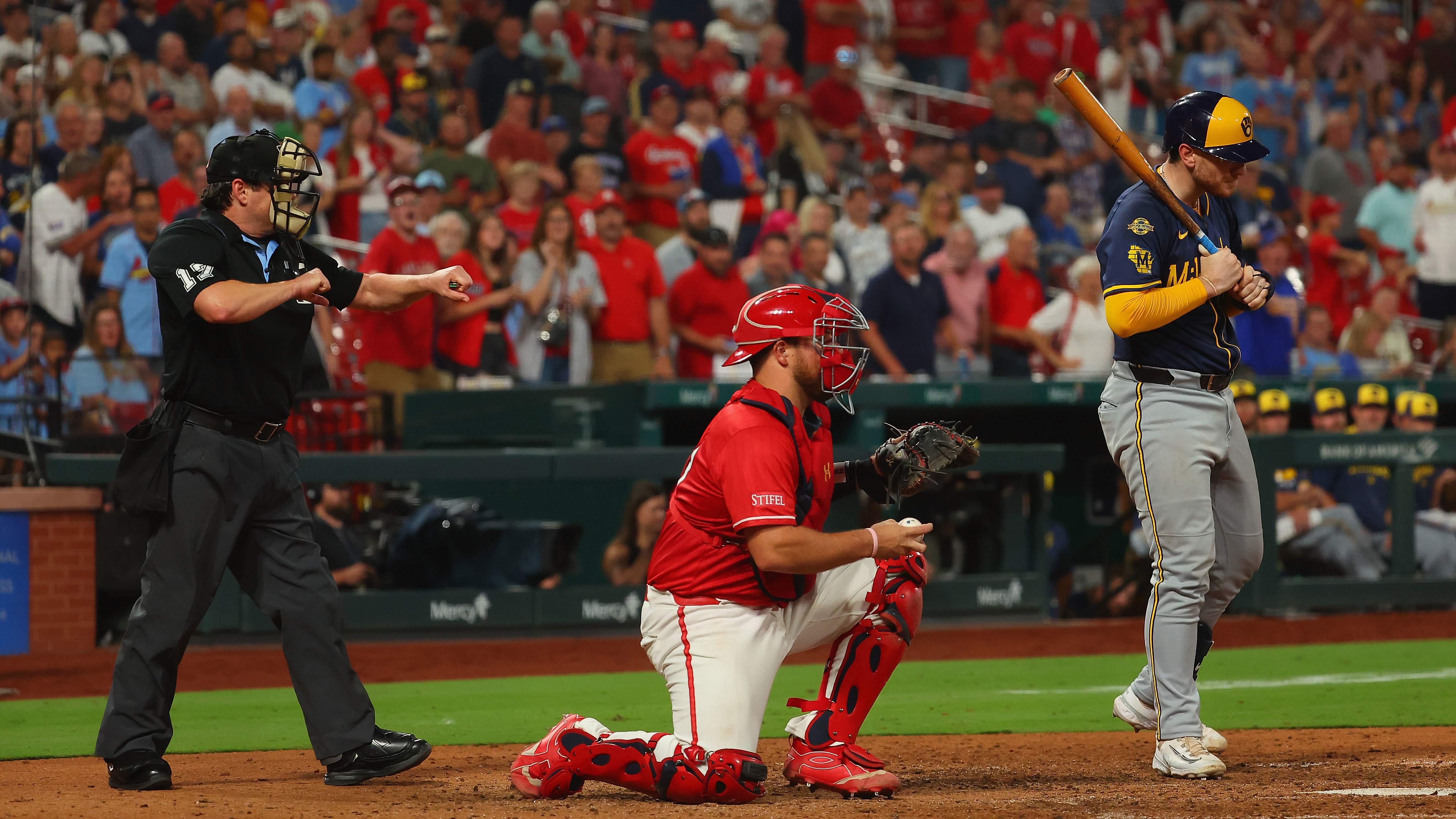
After years of tweaks in the minor leagues and a trial run in major league spring training, Major League Baseball announced that they will adopt the use of Automated Ball-Strike (ABS) challenge system next season. The feedback from players and coaches were overwhelmingly positive reviews of the new technology, although there was some concern it would place less value on the catcher position or create additional issues with umpires.
However, a piece in The Athletic featured Giants catcher Patrick Bailey, who is well-known for his great ability to frame pitches and has a full-time role despite being limited offensively. When the idea of ABS came up, he originally thought that would be detrimental to the position, but with adjustments to challenge rules and how often it will be used, he feels it will not change the game too much and the majority of the clubhouse favored the change.
MLB announces ABS challenge system for next year
The format for the ABS challenge system will be very similar to what we saw during Spring Training and a brief cameo in the All-Star game. Teams will receive two opportunities to challenge a call per game and that challenge is initiated by the catcher, pitcher, or hitter tapping their hat/helmet. If the challenge is successful, the team will keep their challenge. This season, a helmet tap led to immediate ejections as it was seen as players discrediting umpires. Next year, though, I would expect to see teams exhaust their challenges but the strategies in which they do so will be interesting to follow.
Within that article, Katie Woo specifically mentioned that Lars Nootbaar could benefit from the decision to allow hitters to challenge strike calls. Last season, Nootbaar’s patient approach bit him as he was one of the players who had the most balls called strikes against him. How he handles the ability to put his strike zone knowledge to the test could change as the season goes on. Nootbaar acknowledged that the potential error from umpires could change a hitter’s approach, especially when they are behind in the count.
“With two strikes, I think the majority of hitters expand because we’re worried about striking out, but you also don’t necessarily want the call to be in the umpire’s hands,” Nootbaar said. “So now you can trust your eyes, and if it doesn’t go your way, then you at least have something to challenge. I still think there’s a place for umpires in this game. But this could have a ripple effect, where, if you’re feeling good as a hitter, and then you get a challenge go your way, all of a sudden something big can happen. I’m excited for it.”
It will be interesting to track which individual player uses challenges most often, but also if the pitcher, catcher, or hitter uses it most and the success rate of those challenges. I am also looking forward to hearing how coaches and managers want their players to handle the ability to question the umpires and if they will allow free reign on using the limited challenges or if they prefer a more situation-oriented approach. No matter how teams decide to use the new system, I personally believe this is a great middle ground to keep players, coaches, and fans happy.
Leave a Reply